
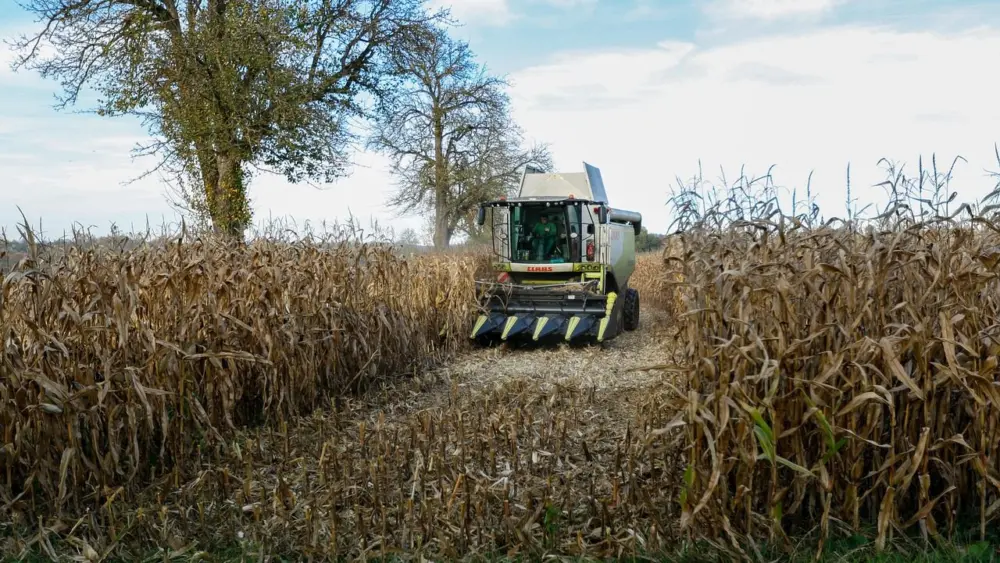
Soybean harvest in north central Iowa is coming to a close and some farmers have seen some surprisingly strong yields in 2025.
Angie Rieck-Hinz, a field agronomist in north central Iowa, tells RadioOnTheGo News despite a wetter-than-normal summer, some farmers in her area reported soybean yields from 65 to 75 bushels per acre.
Corn, however, told a different story. Rieck-Hinz says corn yields were affected as southern rust carved a path through the heart of the state.
“Some people don’t share yields. What I’ve heard on average is we’ve lost 40 to 80 bushels if we didn’t treat with a fungicide on corn this year. That’s probably more variable than that. And even places where we did treat with a fungicide, we probably still took off some yield from southern rust just due to timing on fungicide applications. Things we need to think about too in terms of reduced corn yield, although there are some people with some pretty nice yields. It just depends on where you are. That southern rust was definitely the most impactful right up the middle third of the state. So as you went further east or further west, not as great an impact.”
She says there are other contributing factors to corn yields this year.
“We need to think about, we had a lot of excess rainfall in June and July, nearly double the amount of rainfall we normally get for that time period in a lot of places in North Central Iowa. We can think about the fact that because of some of that rain, we’ve lost a lot of nitrogen for corn production. We had some really warm overnight temperatures back in July and August and high heat overnight can reduce yields too for various reasons. So it’s kind of like all those things are a little bit additive this year so there’s a lot of things to look at when we come to talk about yields lower than we anticipated.”
Rieck-Hinz says there is a silver lining, though, as the recent rain improved soil sampling conditions.
“In terms of soil sampling, right? It makes soil samples easier to pull. But we’re also cycling those nutrients, especially potassium, out of that residue into the soil. So if we sample earlier and it’s been dry, really dry, like it was earlier this fall, and we’ve taken samples, we may expect to see some lower soil test potassium numbers because it’s dry enough and we haven’t cycled those nutrients back to the soil. But I think looking at your soil tests, if your soil tests aren’t current, and by that I mean you should be taking them every two to four years. We’ve had some significant yields the last couple years that would have removed a lot of nutrients from fields.”
Rieck-Hinz adds that fertilizer prices remain high and crop prices low, but smart sampling and nutrient allocation can help farmers stretch every dollar as they look ahead to 2026.