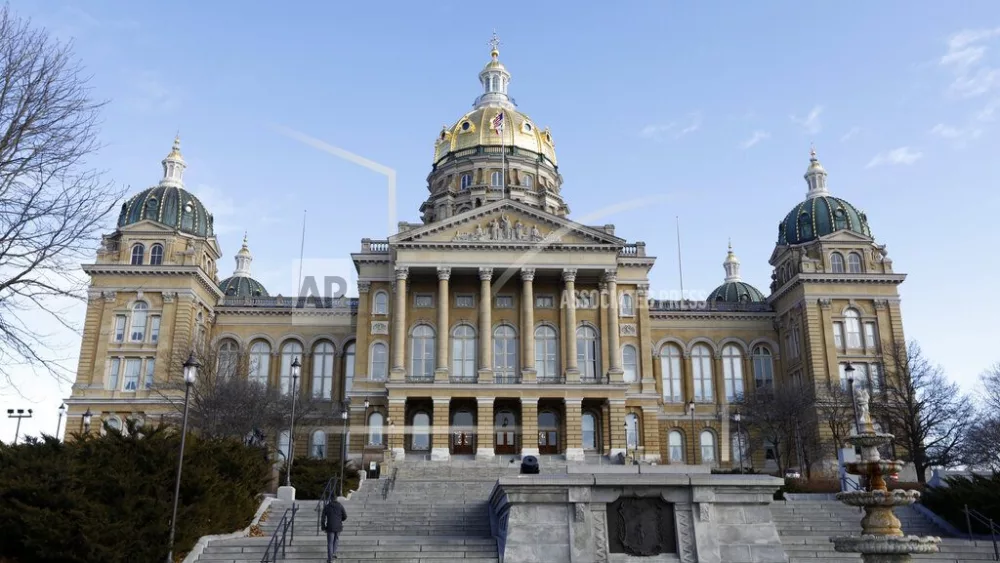

The Iowa Legislature convenes January 12th for the 2026 session, with lawmakers expected to tackle a crowded agenda.
Property tax reform and the state’s budget top the list, alongside renewed debate over eminent domain after Governor Kim Reynolds vetoed legislation aimed at limiting its use for carbon capture pipelines. Education policy is also expected to be a central focus as the session gets underway.
State Senator Annette Sweeney, a Republican from Alden, tells RadioOnTheGo News lawmakers are preparing to take up property tax reform once again when the session begins next month.
“We’ve heard a lot of individuals talk to us that how high their property taxes are. And with that, we also need to make sure that we put out how property taxes are figured and how we come about with those particular numbers. So with that, I am honing in on making sure that property tax reform does not short our smaller rural areas on services that we need to, I mean, plowing, you know, the snow and things like that. So we need to make sure that it is conducive to be able to keep our counties and cities functioning.”
With state revenue expected to decline despite steady consumer spending, Sweeney says the outlook is concerning but lawmakers are ready to address the projected shortfall.
“Well, I am concerned about our revenue in which we are, you know, receiving it to keep our counties, state, everything open. And we also have to look at our farm economy and our farm economy is what drives our revenues here in our state. And it’s not been good for the farmers, not at all. So we, might have to hit a little rough patch on revenue and, and being able to collect our revenue and with the farm economy that I’m really honing in on. So I’m concerned.”
After Governor Kim Reynolds vetoed legislation restricting the use of eminent domain, Sweeney says they are ready to move forward and put the issue to rest.
“For the governor vetoing the bill, a lot of people don’t understand that it was restricting eminent domain for every pipeline, just not the CO2 pipeline, but for every pipeline, that would mean rural water. That would mean other pipelines that are scheduled to be put in, (like) natural gas pipelines. And I give another example of anhydrous pipeline that we have going across the street that’s privately owned and services us farmers. So we don’t need to limit ourselves. That bill, devil in the details, but it really handcuffed us in order for our state to move forward with infrastructure.”
These issues are expected to shape much of the debate when lawmakers return to the Capitol for the 2026 legislative session beginning January 12th.