Dry winter raises early questions for spring planting

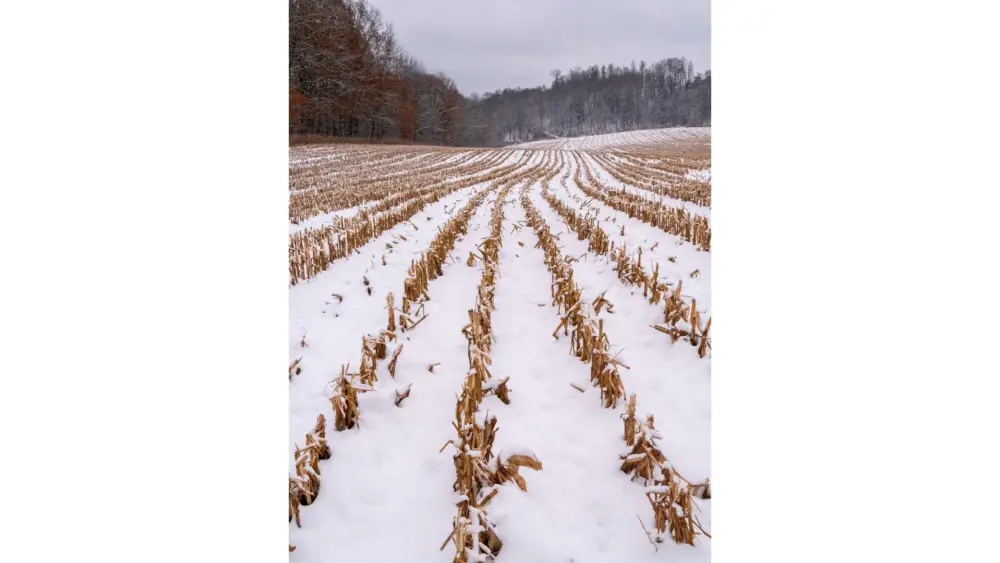
corn-field-snow-winter

After weeks of record-breaking warmth and dry conditions across Iowa, a round of heavy moisture is moving across the state — offering some relief to farmers who have been watching soil conditions closely.

Locally, February temperatures have climbed above 60 degrees over the past 10 days, paired with persistent winds and very little precipitation. The result: what experts describe as a snow drought — a winter marked by low snowpack due to warm or dry conditions. 

“We are fairly dry. January and all of February up until now has been dry. And while we’re seven and a half, eight weeks out from planting, we could use some soil moisture going into spring. I hate to say it, but we could use some colder temperatures as well. So if we can get some moisture, get some frozen soils, get some thawing, get some freezing. That water helps expand those big old clods out there. If by chance you did tillage and it was too wet last fall to help break up the clods on the surface, it will certainly help get those soils in better shape for spring planting conditions.”

That’s Iowa State University Extension Field Agronomist Angie Rieck-Hinz. Unlike steady snow cover that slowly melts and recharges soil moisture, this winter’s pattern left many fields exposed and drying earlier than normal. Rieck-Hinz says soils were noticeably dry in recent weeks, with some strip-till fields lacking moisture several inches down. 

“I just walked through a soybean stubble field the other day and I was shocked. It was a strip-till field. How dry it was in those strips. So at least my opinion right now, it’s only February, is those strips probably don’t need any reconditioning. They were awful soft and fluffy. So if we stay dry like this, we’re going to have to think about what that means, at least in those strip-till fields, for planting conditions and where that seed’s going to end up. But like I said, we’re about seven weeks out. So we got some time. Hopefully we get a little more moisture. Hopefully we get a few more freeze-thaw cycles to help.”

While planting is still weeks away, she says conditions in the next several weeks will ultimately determine how fields shape up for spring.

Related Posts

Loading...