
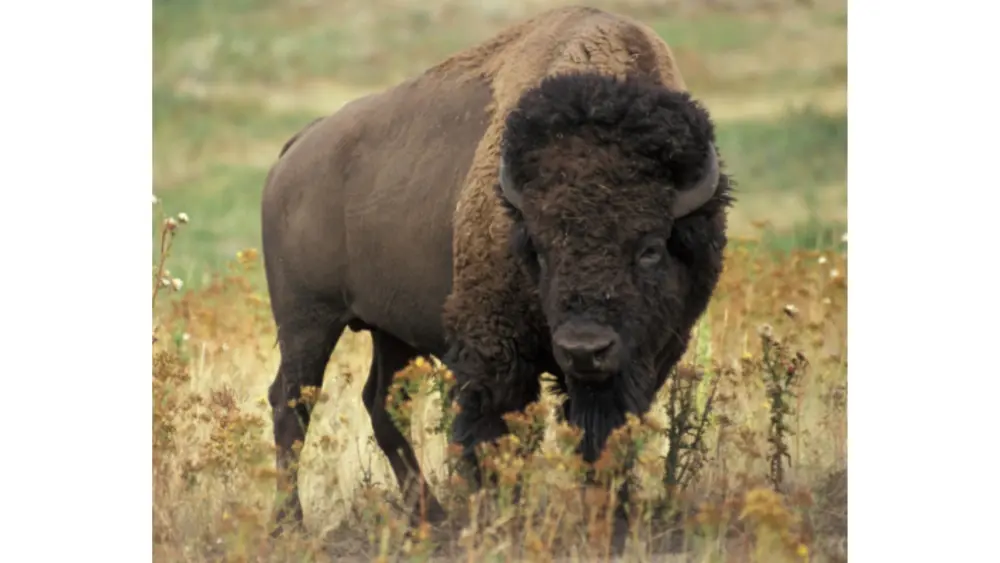
American bison once roamed Iowa and much of the Midwest in massive herds, playing a critical role in maintaining prairie ecosystems.
During a recent appearance on the “Exploring Outdoors in North Iowa” program on KLMJ, Franklin and Wright County Naturalist Aubrey Brown explained that bison are considered a keystone species.
“Bison used to roam in huge herds in the central United States residing in the tall grass prairies that once covered the Midwest,” says Brown. “Bison are considered a keystone species for prairies, meaning their grazing patterns, movement, and walling behavior create disturbances that promote plant diversity, nutrient recycling, and healthy habitat for other grassland animals.”
Before European settlement, an estimated 60 million bison lived across North America. By the late 19th century, commercial hunting and disease had reduced that number to around 600. Conservation efforts in the 20th century helped the species rebound, with more than 30,000 wild bison recorded by 2019, though the species remains classified as near threatened.
While bison no longer roam wild in Iowa, Brown says residents can still see them within the state.
“Although you can’t find bison in the wilds of Iowa anymore, you can still see these amazing animals at places such as Neal Smith National Wildlife Refuge in Prairie City and Jester Park in Granger,” says Brown.
Brown also clarified that bison and buffalo are not the same animal. There are no native species of buffalo in the United States.