
With the calendar turning to March and spring just weeks away, thoughts are turning to warmer days — despite Punxsutawney Phil predicting six more weeks of winter back in early February.
While the famous groundhog gets most of the attention each year, he’s far from the only animal linked to weather lore. On a recent appearance on the Outdoors in North Iowa podcast, Butler County Naturalist Annette Wittrock said woolly bear caterpillars, the fuzzy black-and-brown insects often spotted in the fall, are said to predict winter severity based on the color of their of their 13 body segments, which are said to represent the 13 weeks of winter.
“So the color of each segment is important. So if the body segment is black, that’s said to represent the harsher winter weather. And if it’s brown, it represents a milder winter. So if the first nine segments are black, the middle three are brown and the last one is black, that would mean that the first nine weeks of winter are going to be cold and snowy, the next three will be milder, and the last week will be bad again. But if you catch 10 woolly bear caterpillars on the same day, how would you choose which one to believe? Again, no scientific proof that the color will predict the weather, but is most likely based on what they eat, their age, and environmental conditions.”
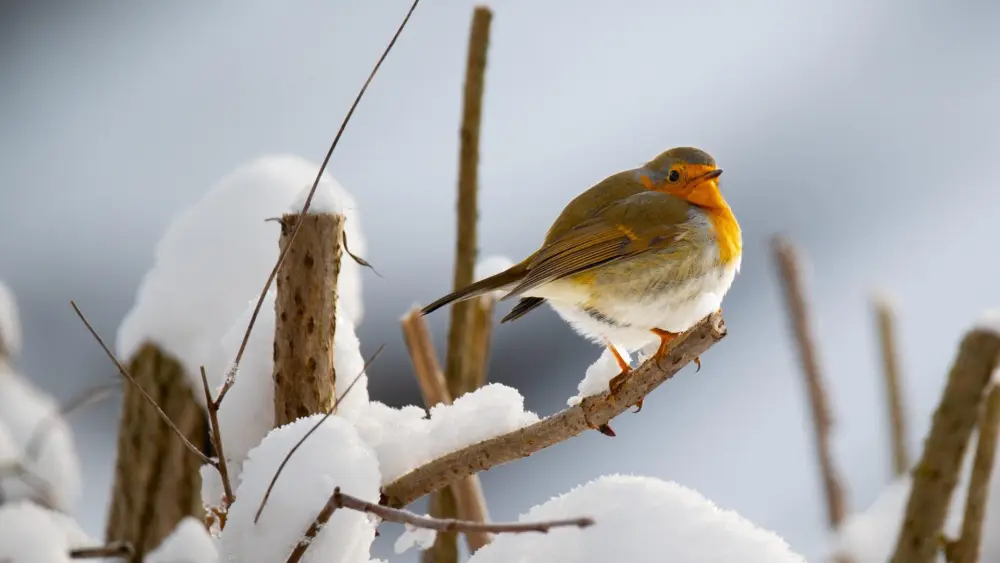
Wittrock says robins are commonly viewed as a sign of spring, while other birds are believed to hint at shifting weather patterns.
“If they’re catching worms that probably means that the ground is at least no longer frozen which may be a sign of spring. Many other birds are said to fly lower or gather in groups or go inland before storms. Some people say that crows will build their nests lower if the summer is going to be wet. Geese are said to migrate early if the winter is going to be early or more harsh. Turkey vultures are said to never get snow on their back and since they eat carrion which they find by smell. They’re less likely to migrate back north before the temperatures get warm.”
Wittrock adds that insects like crickets even have a bit of science behind them — Dolbear’s Law suggests counting chirps over 15 seconds and adding 40 can estimate the temperature in degrees Fahrenheit.
While some animal behaviors reflect environmental changes, many weather predictions remain rooted in tradition rather than proven science.
Full segment below